











Early History
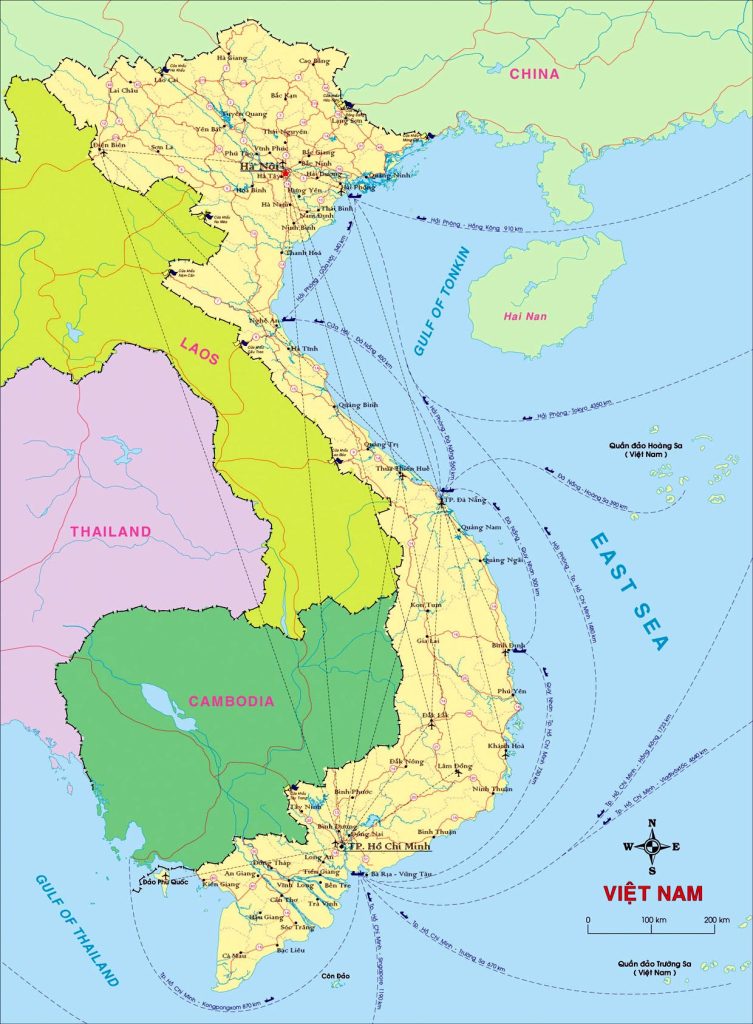
The country that is now Vietnam has been inhabited since the beginning of time. According to archaeological discoveries, organised communities started to emerge as early as the first millennium BC. Up to the Chinese invasion in 111 BC, which caused the civilizations of Vietnam and China to converge, early society was mostly focused on agriculture and feudalism, with numerous dynasties ruling over different regions of Vietnam. For hundreds of years, the region was ruled by several Chinese dynasties, but in 905, the Vietnamese gained independence as a result of uprisings. Vietnam entered an era of independence in 938, marking the end of this period of Chinese imperial rule.


Recent History
Following the Sino-French War of 1884 and 1885, French colonists gained control of Vietnam and began to influence it during the 19th century. French Indochina, which encompassed portions of Vietnam, Cambodia, and subsequently, Laos, was created in 1887. Even though the French were able to stifle domestic liberation aspirations for a long time, their rule was eventually overthrown in 1954 when Vietnamese troops defeated the French during the first Indochina War. Vietnam was split after this conflict, with distinct troops controlling the north (headed by Ho Chi Minh) and the south (led by Ngo Dinh Diem, with support from the United States).
The second Indochina War caused widespread destruction and upheaval for the Vietnamese people, and as a result, a large number of individuals left Vietnam in search of sanctuary in other parts of the world. The Socialist Republic of Vietnam was created in July 1976 following the country's reunification in April 1975. Vietnam has lately profited from the free market economy that was established in 1986. Vietnam's economy is still growing, with agriculture and industry serving as the foundation and the tourist industry also making a contribution. Economic, educational, and health conditions have all significantly improved recently, and perhaps they will do so in the years ahead.